

- Josef Krebs
- Donor Relationships
Reading Time: 3 minutes
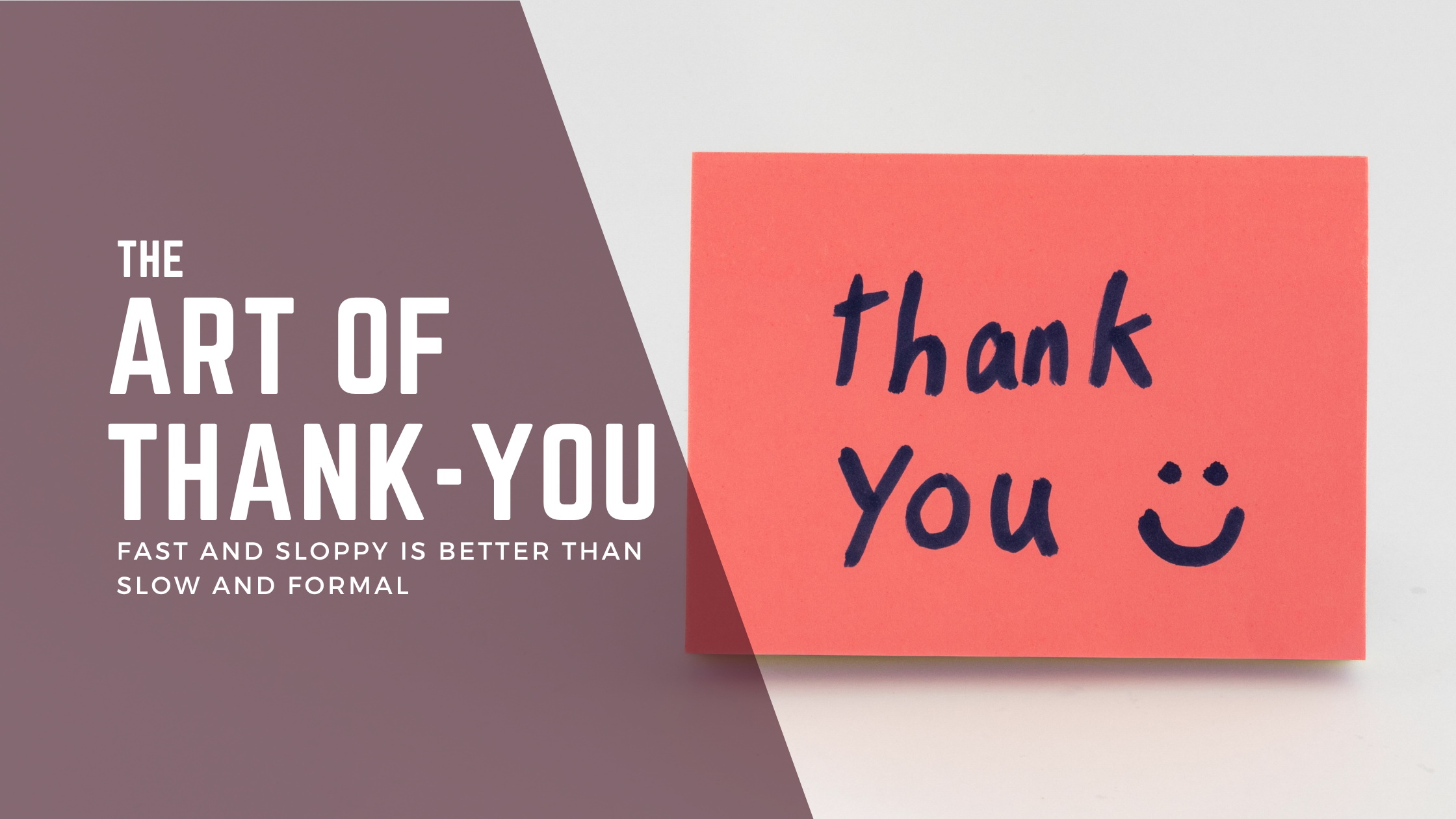
Fast and Sloppy Is Better Than Slow and Formal: The Art of the Thank-You
Most organizations know they should thank their donors. They just don’t do it fast enough.
Here’s what I’ve learned after decades in fundraising: the single most powerful thing you can do to cultivate a culture of generosity is also the simplest. Thank people. Do it quickly, from the heart. And then thank them again, more formally, later.
I call this the two-step thanks.
Step One: Fast and Sloppy
The first thank-you should go out as soon as humanly possible after a gift arrives. Not a polished masterpiece, but a fast, sloppy email. Two sentences:
“Wow, John, we just got your gift today. It means so much, and a more formal thank-you is on its way.”
There is no way to screw this up, as long as you keep it short, and send it immediately. The data is clear: donor renewal rates drop measurably between a thank-you sent within 24 hours and one sent at 48. Every hour you wait, you’re leaving relationship on the table.
One of the ironies of fundraising is that, the larger the gift, the more paralyzed development staff often become. I’ve seen organizations wait six or seven weeks to acknowledge their single largest gift of the year, because someone was, “working on the thank-you letter.” By that point, any thanks feels weird. If the donor sees your name on a cancelled check before they see it on a thank-you note, you’ve told them what your priorities are. And not in a good way.
Anxiety around high-stakes emails is surprisingly common, even among high performers. But a fast and sloppy thank-you is the one email you genuinely cannot get wrong. Keep it short, keep it warm, send it.
Step Two: Formal Acknowledgment
The second step is a formal acknowledgment with everything a donor’s accountant needs, in order to capture the tax deduction. It can take a little more time and care. Maybe this is where you want to talk about what the gift will fund, or who it will help. But it follows the first step. It never replaces it.
Beyond the Two Steps
Once a year, gather your board and senior staff, order some Thai food, and spend an afternoon calling donors. Most won’t pick up, that’s fine. A voicemail saying “Hey, it’s Josef, we really appreciated your gift,” is more than enough. Ten people in a room can make 100 calls in an afternoon. It costs almost nothing. It works. And it can be a good reminder, for your people, about who really keeps the lights on: your donors.
Why It Matters
Fundraising isn’t really about money. It’s about the generous impulse; recognizing it, cultivating it, reflecting it back. Lewis Hyde wrote that the desire to give actually arises from gratitude. When we feel like we’ve been lucky—because of our talent, our timing, our family, or what have you—we want to acknowledge that good fortune by giving away some part of what we’ve received. It’s a way of entering into dialogue with something larger. When you don’t thank a donor, it’s like they paid to call someone they really wanted to talk to, nobody picked up, and they still got charged. When you do, fast, warmly, genuinely, you’re saying: I see you. What you did mattered.
That’s not just good manners. That’s the whole game.
The Rules
- Thank fast. Fast is better than good.
- Keep it short. Two sentences beats two paragraphs.
- Thank from the heart. Earnest beats polished.
- Follow up formally. Give them what they need for their accountant.
- Make it a culture. Build the habit into your organization’s rhythm.
If your organization is struggling to raise money, the first place I look is thanks. Get that right, and everything else gets easier.
continue the conversation
A sincere thank-you can transform donor relationships. Join Scandiuzzi Krebs co-founder Josef Krebs for a free, interactive Zoom workshop on authentic donor stewardship. Josef will share practical strategies for meaningful thank-yous, followed by an open Q&A where participants are encouraged to bring their own letters, emails, and stewardship ideas for discussion. Whether you’re new to fundraising or have years of experience, you’ll leave with practical ideas you can put to work right away.
Free to attend. RSVP required.